🕷️ True bug mouthparts: how feeding works
🧾 Quick Facts
The term "true bugs" refers to insects in the order Hemiptera, equipped with specialized mouthparts for piercing and sucking. These fascinating insects display a remarkable variety of feeding habits and habitats. Let's explore some quick facts about their unique adaptations.
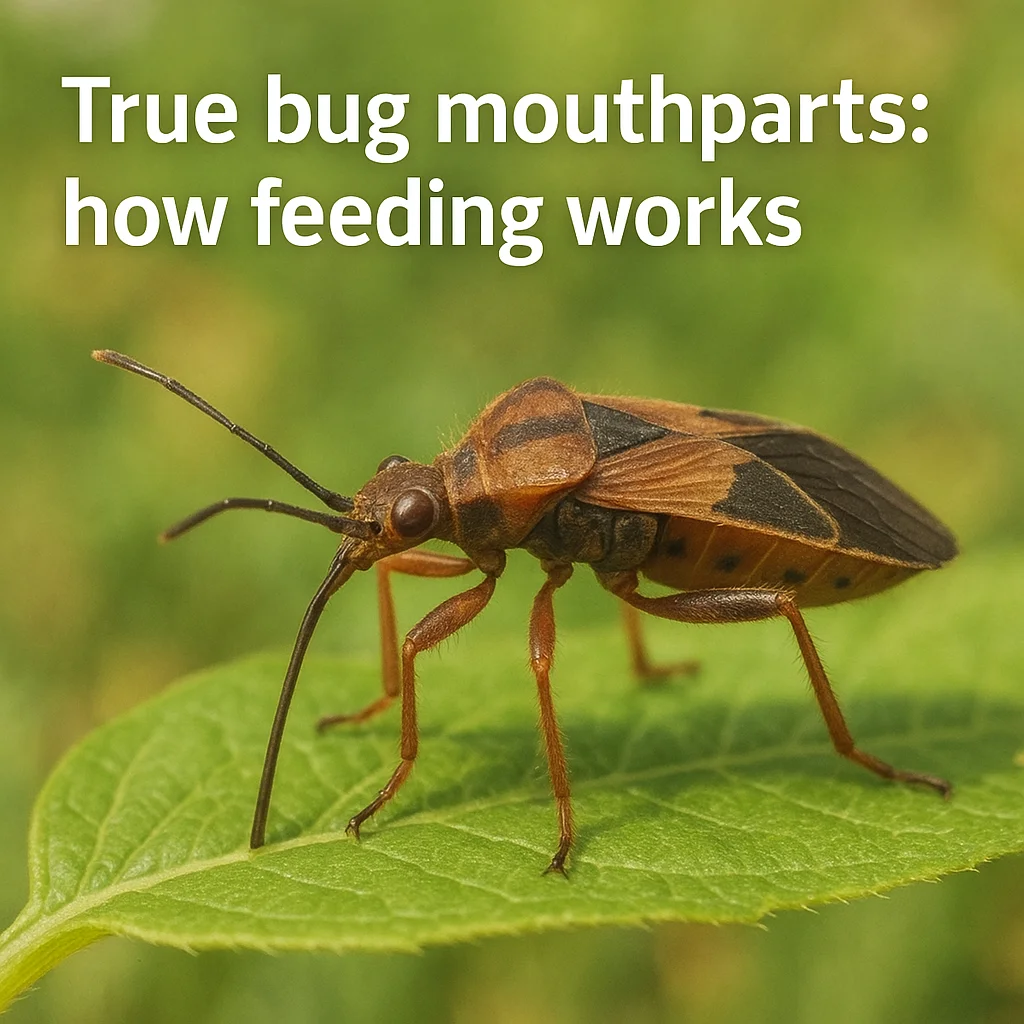
- Common names: True bugs, Hemipterans
- Scientific name: Varies across species within the order Hemiptera
- Insect or not: Yes, invertebrate
- Order/Family: Hemiptera, families vary across species
- Typical size range: 1 mm to over 10 cm (adult)
- Key colors/patterns: Green, brown, mottled patterns, some brightly colored
- Activity: Mostly diurnal, some nocturnal
- Typical habitats: Terrestrial and aquatic environments
- Where in the world it occurs: Worldwide
- Seasonality: Varies, often more visible in spring and summer
🔍 Identification
Identifying true bugs can be an exciting challenge. These insects typically have a distinct body shape with a flat back and triangular scutellum. Many species bear membranous wings folded flat over their abdomen, overlapping to form a characteristic X or V pattern.
Key identification features include:
- Body shape: Flattened, shield-like with a distinct scutellum
- Antennae: Usually long and segmented
- Wing features: Forewings partially leathery and partly membranous
- Leg traits: Adapted for walking, predatory species may have grasping front legs
- Distinguishing look-alikes: Often confused with beetles, but lack hardened elytra
- Common confusion: With leafhoppers and aphids due to similar piercing mouthparts
🧠 Basic Body Structure
True bugs, like all insects, are composed of three primary body segments: the head, thorax, and abdomen. They possess an exoskeleton that provides structural support and protection. All true bugs have six legs and two pairs of wings, although the wings may vary greatly in form and function among different species.
They are invertebrates, meaning they lack a backbone and rely on their exoskeleton for support.
🌍 Habitat & Distribution
True bugs occupy a vast array of habitats, from lush forests and grasslands to humid wetlands and urban gardens. Some are found on plants, while others reside in soil or water. Their distribution is global, thriving in diverse climates and environments.
These insects can often be found in microhabitats such as under bark, amidst leaf litter, or on flowers. Habitat changes, such as deforestation or pesticide use, can significantly affect their distribution and visibility.
📅 Seasonal Appearance & Activity
True bugs are best observed during the warmer months when they are most active. They are generally diurnal but some species may venture out at night. Temperature and humidity influence their activity, as warm and moist conditions tend to encourage feeding and mating.
- Most visible in spring and summer
- Active in warmer climates throughout the year
- Diurnal activity patterns, with exceptions
- Rainfall can influence population visibility
🥚 Reproduction & Egg-Laying
Mating behavior in true bugs varies. Some use chemical signals or vibrations for courtship. Females lay eggs on plants, soil, or in water, depending on the species. Egg-laying strategies and counts fluctuate, with some species producing clusters of eggs while others scatter them singly.
🌀 Metamorphosis & Life Cycle
True bugs undergo incomplete metamorphosis, comprising three developmental stages: egg, nymph, and adult. Eggs hatch into nymphs, resembling miniature adults, which then undergo several molts before reaching maturity.
Nymphs and adults typically share similar habitats and diets, feeding on plant sap, insects, or organic matter, depending on the species. Development rates vary based on environmental conditions.
🍽️ Diet & Feeding Behavior
The distinctive piercing-sucking mouthparts of true bugs enable them to feed in various ways. Some are herbivores, extracting sap from plants, while others are predators or scavengers. Their feeding tools, designed for their roles, highlight their adaptability in feeding strategies.
🦉 Predators & Defense
Numerous creatures prey on true bugs, including birds, reptiles, spiders, and parasitoid wasps. In defense, true bugs may camouflage with their surroundings, exhibit mimicry, or release chemicals. Their exoskeleton offers some protection, and some species are adept at escaping threats through rapid flight or diving.
- True bugs often blend into the environment
- Often exude defensive chemicals if threatened
- May drop to the ground or fly when startled
- Their body shape offers passive defense
👥 Social Behavior & Swarms
True bugs are mostly solitary, although some species may be found in larger groups, especially during feeding or migration. These aggregations are often opportunistic rather than social constructs, serving as a response to environmental triggers or abundance of resources.
🧭 Senses & Communication
True bugs utilize keen sensory organs to navigate and interact with their environment. They rely on vision, smell, touch, and sometimes sound or vibration to communicate. Chemical signals play vital roles, with some species known for releasing pheromones to attract mates or signal alarm.
🌱 Role in the Ecosystem
True bugs have diverse ecological roles, acting as herbivores, predators, or scavengers within their ecosystems. They contribute to pollination and decomposition, serving as vital components of food chains. While some can impact agriculture as pests, others assist in pest control and enhance biodiversity.
📉 Population & Conservation Notes
The population status of true bugs is highly variable. Many remain common across suitable habitats, yet some face threats from habitat loss, pesticides, and pollution. Conservation efforts focus on maintaining natural habitats and reducing harmful agricultural practices.
- Preserve natural habitats
- Promote native plant growth
- Avoid using pesticides when possible
- Encourage biodiversity in gardens
⚠️ Human Interaction & Safety
Generally harmless, true bugs can bite when handled or provoked, potentially causing mild irritation. If a reaction occurs, cleanse the area and avoid irritation. For severe reactions, seek professional advice. Observations should be non-intrusive, respecting their role in nature.
📌 Summary
- True bugs are diverse insects within the order Hemiptera
- Identified by their unique mouthparts and distinctive body shape
- Habitat: Widely distributed across diverse ecosystems
- Seasonality: Most active during warm seasons
- Life Cycle: Undergo incomplete metamorphosis
- Diet: Includes herbivorous, predatory, or scavenging behaviors
- Predators: Include birds, spiders, and more
- Ecologically significant due to their varied roles
- Conservation focuses on habitat preservation
- Respectful human observation is encouraged