🕷️ Aquatic insects vs aquatic bugs (difference)
🧾 Quick Facts
Aquatic insects and aquatic bugs are fascinating inhabitants of our freshwater ecosystems. Despite often being confused for one another, they belong to distinct groups and exhibit unique characteristics depending on their taxonomic classification and habitat preference.
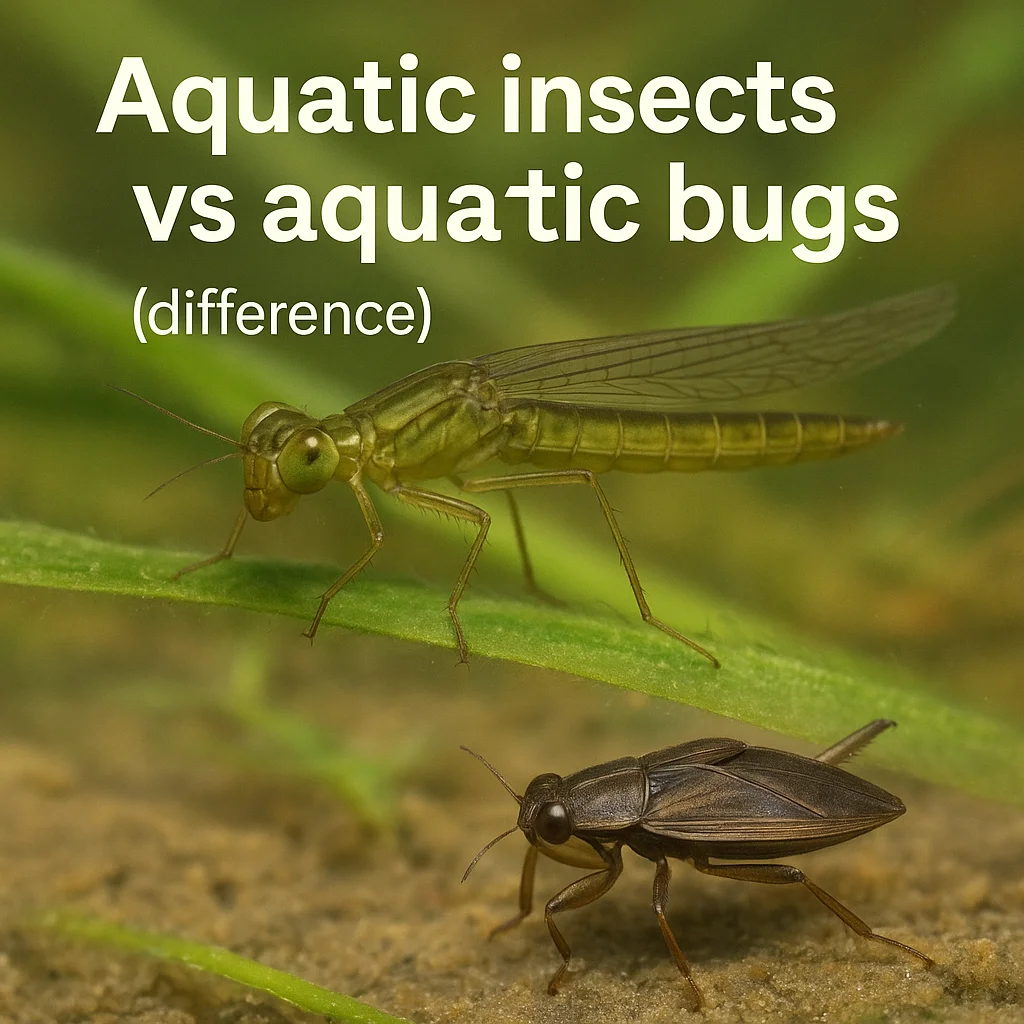
- Common names: Water insects, Water bugs
- Scientific name: Varies
- Insect or not: Aquatic insects are true insects with six legs and three main body parts.
- Order / family: Varies (e.g., Hemiptera, Coleoptera, Odonata)
- Typical size range (adult): 1 mm to 70 mm
- Key colors/patterns: Brown, green, black, metallic hues; often cryptic
- Activity: Primarily diurnal
- Typical habitats: Freshwater environments, streams, ponds, wetlands
- Where in the world it occurs: Global distribution, varying by species and regions
- Seasonality: Depends on climate, often seen spring to fall
🔍 Identification
Identifying aquatic insects and bugs involves noting differences in body structure and habitat. Aquatic insects such as dragonflies have a distinct long body and membranous wings, while water bugs, like water striders, have shorter, broader bodies.
- Body shape and silhouette: Varied; elongate bodies of dragonflies vs. flat bodies of backswimmers.
- Antennae type: Generally short in aquatic bugs, varied in beetles.
- Wing features: Some with fully developed wings, others with reduced or no wings.
- Leg traits and movement style: Adapted for swimming; long, oar-like legs in some bugs.
- Distinguishing look-alikes and common confusion: Dragonfly larvae vs. damsel-nymphs, water beetles vs. true bugs.
- Observe body shape (elongate vs. broad).
- Check wing presence and structure.
- Note leg adaptations for swimming.
- Observe behavior—sitting on water surface or diving.
- Differentiate between narrow and broad head shapes.
- Look for unique colors or patterns.
- Watch swimming patterns (e.g., gliding vs. jerky movements).
🧠 Basic Body Structure
Aquatic insects and bugs possess a tripartite body consisting of the head, thorax, and abdomen. Most have adaptations like hydrodynamic body shapes for movement in water, and aquatic insects feature six legs. They are invertebrates, meaning they have no backbone and are supported by an exoskeleton. Regular molting allows them to grow, with some species also featuring wings, either developed for flying or reduced for underwater mobility.
🌍 Habitat & Distribution
Aquatic insects and bugs thrive in diverse freshwater environments. These species are often found around ponds, lakes, rivers, and even marshes. Microhabitats such as underwater vegetation, silty beds, and water edges serve as crucial life stages' habitats. These insects have a global distribution, with their populations density varying significantly. Climate variations in regions imply that sightings are profoundly affected by habitat quality and changes.
📅 Seasonal Appearance & Activity
Being primarily active during warmer months, most aquatic insects and bugs are found from spring through late fall in temperate regions. Tropical populations may be observed year-round. Their activity is mostly diurnal, with individuals basking in sunlight or hiding beneath the water in extreme temperatures.
- Best observed in spring and summer.
- Activity peaks during daylight hours.
- Warm, sunny days are optimal for sightings.
- Frequent around blooming aquatic plants.
- After rains, increased activity notified in certain species.
🥚 Reproduction & Egg-Laying
During courtship, many aquatic insects and bugs display unique behaviors like light flashing or intricate movements. Eggs are typically laid in water or on aquatic plants, providing a safe environment for their development. The quantity of eggs varies significantly; dragonflies may lay batches of up to hundreds, while beetles might opt for fewer, more strategically located eggs.
🌀 Metamorphosis & Life Cycle
Many aquatic insects undergo incomplete metamorphosis, featuring stages such as egg, nymph, and adult. Nymphs live underwater, exploiting a diet different from their adult form, which may exit the water upon maturity. Insects like dragonflies and mayflies experience a lifecycle where metamorphosis concludes with a winged adult stage.
Nutritional sources evolve with age stages; aquatic nymphs typically consume algae or detritus, while adults may feed on smaller insects or nectar.
🍽️ Diet & Feeding Behavior
Aquatic insects and bugs exhibit feeding diversity based on life stages. Nymphs tend towards herbivory or detritivory, utilizing specialized chewing mouthparts, while many adults switch to carnivorous diets or continue to engage in herbivory. Adults like beetles and true bugs use piercing-sucking mouthparts, predating on small aquatic organisms. Their functional roles encompass predator, scavenger, and pollinator elements depending on species.
🦉 Predators & Defense
Natural predators of aquatic insects include birds, amphibians like frogs, fishes, and predatory insects. Defensive adaptations are varied; species may possess protective coloration, mimicry, or the ability to dive swiftly to evade capture. Many exploit their environment or behaviors like clustering or burrowing.
- Effective camouflage with environment.
- Speedy diving to evade threats.
- Chemical secretions deter predators.
- Mimicking less palatable species.
- Protective armor in certain beetles.
👥 Social Behavior & Swarms
While many aquatic bugs are solitary, some, like water striders, form temporary aggregations when resources are abundant. Solitary behaviors often drive territorial defense, meeting only for mating. When swarming or migrative triggers occur, it involves population pressure, habitat changes, or climatic signals.
🧭 Senses & Communication
Acute senses aid in aquatic insects and bugs' survival and communication, with vision and olfactory capabilities significantly developed. Tactile sensations are enhanced by antennal sensors and body hair. Communication methods involve pheromone dispersal or mechanical sound production, such as the water strider's vibrations on water surfaces.
🌱 Role in the Ecosystem
Aquatic insects and bugs play vital ecological roles, including pollination of water-margin plants, decomposition, and serving as a food source within the aquatic food web. Their interactions with other aquatic life forms contribute significantly to energy transfer across ecosystems. Benefits to humans include biological pest control and contributions to biodiversity, although some species can emerge in large numbers affecting local resources.
📉 Population & Conservation Notes
The global abundance of aquatic insects and bugs is variable; they are often numerous where suitable habitats exist. However, changes in water quality, habitat destruction, and pollution can threaten populations in certain regions. Climate change further exacerbates these challenges by altering environmental conditions.
- Encourage planting native aquatic vegetation.
- Maintain clean and pollutant-free water bodies.
- Promote educational awareness on wetland conservation.
- Avoid chemical pesticides near water sources.
- Leave natural debris like fallen leaves in ponds.
⚠️ Human Interaction & Safety
Most aquatic insects and bugs pose no direct threat to humans. Rarely, some may cause mild skin irritation if handled improperly. Should stings or bites occur, it is best to wash the area with soap and water and avoid scratching. Professional medical advice should be sought if reactions are severe. Observations of aquatic life should remain respectful, emphasizing non-invasive practices.
📌 Summary
- Variety in body shapes from dragonflies to water striders.
- Found in diverse freshwater environments globally.
- Most visible spring through late fall during daylight.
- Incomplete metamorphosis common, with significant lifecycle changes.
- Diet varies; includes herbivorous nymphs and carnivorous adults.
- Predators include birds and amphibians; use camouflage and agility for defense.
- Important ecological roles, from pollination to decomposition.
- Conservation efforts focus on habitat protection and water quality.
- Generally harmless, promoting minimal-interaction observation.