🕷️ How aquatic bugs breathe underwater
🧾 Quick Facts
Aquatic bugs represent a diverse group of insects adapted for life in water. They have developed fascinating methods to breathe underwater, allowing them to thrive in aquatic habitats.
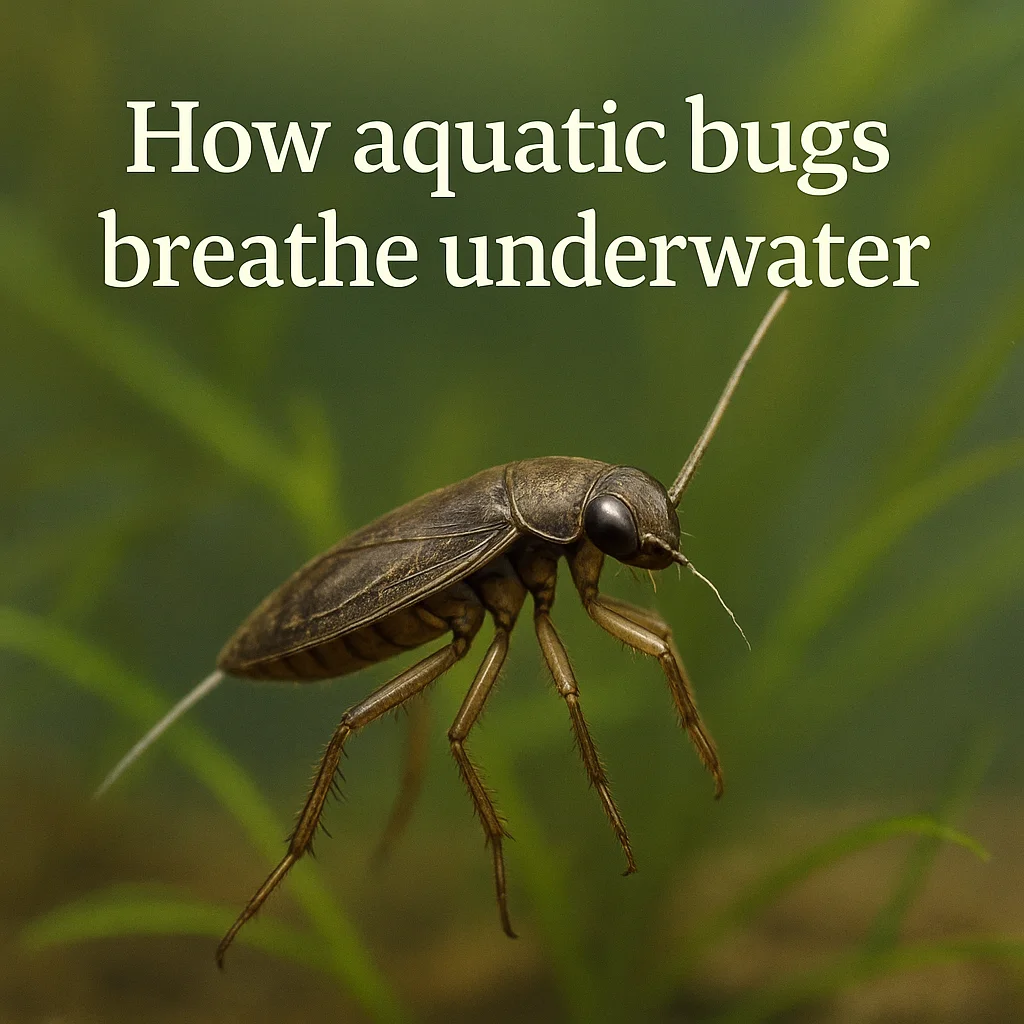
- Common Names: Water bugs, water beetles, water striders
- Scientific Name: Varies by species
- Insect or Not: Invertebrate insect
- Order / Family: Varies (e.g., Hemiptera, Coleoptera)
- Typical Size Range: 1 cm to over 5 cm (varies by species)
- Key Colors/Patterns: Usually brown, green, or black with some species having striking markings
- Activity: Typically diurnal, but some are active at night
- Typical Habitats: Ponds, lakes, streams, and marshes
- Where in the World: Found globally, with species on every continent except Antarctica
- Seasonality: Most active during warmer months
🔍 Identification
Aquatic bugs can be recognized by their streamlined bodies, adapted for life in water. Many possess specialized structures for breathing underwater, like plastrons or snorkel-like breathing tubes. Their legs are often adapted for swimming, with hind legs transformed into oar-like appendages.
- Body shape and silhouette: Elongated and streamlined
- Antennae type: Short and sensitive to detect prey or obstacles
- Wing features: Present in some species, held flat over the body
- Leg traits and movement style: Oar-like legs for swimming; often glide on water surface
- Distinguishing look-alikes: Often confused with beetles but have distinct snorkeling adaptations
- Top ID Tips:
- Look for streamlined, oval bodies
- Note the presence of air-trapping hairs for breathing
- Examine leg adaptation for swimming
- Check for distinctive color patterns
- Observe behavior in water—gliding or swimming
- Consider habitat—aquatic insects are found in or near water
- Compare antennae length and complexity
- Look for snout or rostrum in some species
🧠 Basic Body Structure
As typical insects, aquatic bugs have a head, thorax, and abdomen. They possess six legs, with the hind pair often modified to aid in swimming. The exoskeleton protects their bodies, and some species undergo molting to grow. Many have wings, although some are reduced or absent depending on ecological niche.
Aquatic bugs are invertebrates, meaning they lack a backbone. Instead, they rely on an exoskeleton for support and protection.
🌍 Habitat & Distribution
Aquatic bugs are commonly found in freshwater bodies such as ponds, lakes, marshes, and slow-moving streams. They prefer areas with abundant vegetation which offers food, shelter, and breeding sites. Geographic distribution is wide, with species recorded on every continent except Antarctica, thriving in both tropical and temperate climates. Habitat changes, especially pollution and habitat destruction, can significantly impact sightings.
📅 Seasonal Appearance & Activity
Most aquatic bugs are active during the warmer months of spring and summer when their habitats are more hospitable and prey is abundant. They are primarily diurnal, although some species may exhibit nocturnal behaviors. Weather conditions such as temperature and rain can influence their activity levels.
- Best Time to Spot It:
- Late spring through early autumn
- Midday in warm climates
- Near edges of ponds and streams
- After rainfall during summer
🥚 Reproduction & Egg-Laying
Mating behaviors among aquatic bugs can vary widely. Courtship often includes visual or tactile signals. Females typically lay eggs on aquatic vegetation or submerged surfaces. Egg counts can range significantly between species, with some laying a few dozen and others several hundred. Variables such as water temperature and habitat conditions can impact egg development.
🌀 Metamorphosis & Life Cycle
Aquatic bugs usually undergo incomplete metamorphosis, with three primary stages: egg, nymph, and adult. Nymphs resemble miniature adults and serve as important ecological participants from early stages. They feed on small aquatic organisms, growing through a series of molts over several weeks to months, depending on environmental conditions. The adult stage is reached once growth completes.
🍽️ Diet & Feeding Behavior
Many aquatic bugs are predators, feeding on other small invertebrates, larvae, and sometimes small fish. They use piercing-sucking mouthparts to subdue and consume prey, playing an important role in controlling aquatic pest populations.
As they grow, their diet may vary, with nymphs typically targeting smaller prey. This opportunistic predation contributes significantly to the aquatic food web dynamics.
🦉 Predators & Defense
Natural predators of aquatic bugs include birds, fish, amphibians, and larger insects. Their primary defense mechanisms involve camouflage with their watery environments, using coloration to avoid detection. Some produce distasteful chemicals to deter predators.
- Defense Highlights:
- Camouflage with water surfaces
- Chemical deterrents against predators
- Speed and agility in swimming
- Melting into shadows near vegetation
👥 Social Behavior & Swarms
Most aquatic bugs are solitary, focusing primarily on their survival and reproductive needs. Aggressive behavior can occur during mating, and rare aggregations are usually driven by resource abundance rather than social organization.
🧭 Senses & Communication
Aquatic bugs rely on several senses, particularly vision and vibrations, to detect prey and threats. Some species emit chemical signals for communication, while others rely on tactile interactions during mating. These adaptations ensure they efficiently navigate their watery world.
🌱 Role in the Ecosystem
Aquatic bugs occupy critical roles within their ecosystems. As predators, they regulate populations of other invertebrates. They also contribute to nutrient cycling by breaking down organic matter. The ecological importance of aquatic bugs extends to serving as prey for higher trophic levels, linking aquatic and terrestrial food webs.
Some species also engage in mutualistic relationships with algae and other microorganisms, enhancing nutrient distribution within their habitats.
📉 Population & Conservation Notes
Population status for aquatic bugs widely varies, with many considered common in suitable habitats. However, some face pressures from habitat loss, pollution, and climate change. Conservation efforts should focus on preserving wetland habitats to maintain ecological balance.
- How to Help (Low-Impact):
- Support wetland conservation projects
- Plant native aquatic vegetation
- Reduce pesticide use near water bodies
- Consider creating backyard ponds with native plants
⚠️ Human Interaction & Safety
Aquatic bugs are not particularly dangerous to humans. Some may bite if handled improperly, but such instances are rare. As with any insect interaction, it is best to respect their space and observe from a distance to avoid bites. Cleaning with soap and water can alleviate irritation if bitten.
📌 Summary
- Aquatic bugs are diverse insects adapted to underwater life with varying breathing adaptations.
- Found in freshwater habitats worldwide, including ponds, lakes, and marshes.
- They exhibit incomplete metamorphosis with nymphs and adults having distinct ecological roles.
- Feeding primarily as predators, they help control other aquatic populations.
- Natural camouflage and chemical defenses assist in avoiding predators.
- Mostly solitary with individual survival as focus, social behaviors are rare.
- Play important roles in ecosystems as predators and prey within food webs.
- Conservation focuses on protecting habitats from pollution and destruction.
- Minimal threat to humans; interaction should be respectful and non-invasive.