🕷️ How to observe pond insects safely
🧾 Quick Facts
Pond insects are fascinating creatures to observe, especially for those interested in the rich biodiversity of aquatic ecosystems. Whether exploring a local pond or a stream, understanding these insects will enhance your nature experience.
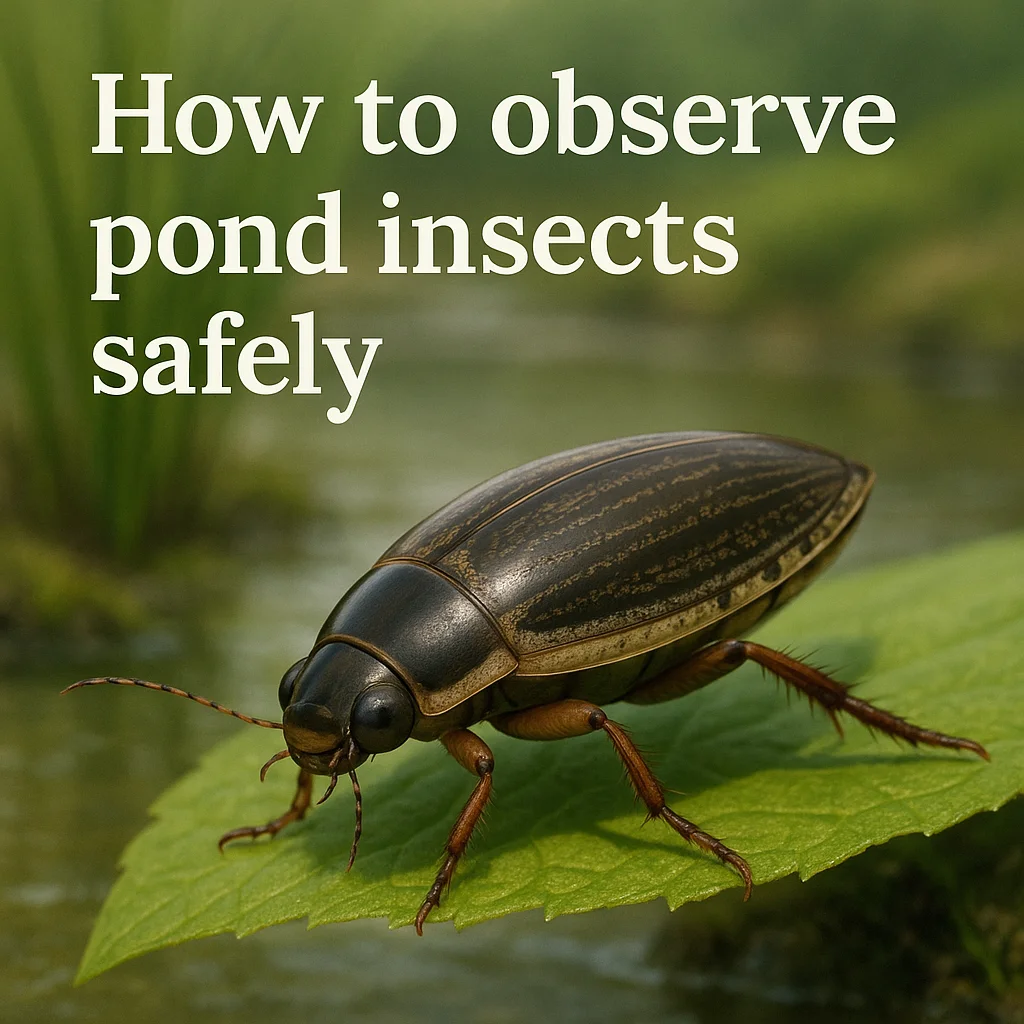
- Common names: Water striders, backswimmers, diving beetles
- Scientific name: Varies
- Insect or not: Invertebrate (insects)
- Order / family: Varies (Hemiptera, Coleoptera, etc.)
- Typical size range: 2mm to 40mm
- Key colors/patterns: Black, brown, metallic sheen
- Activity: Mostly diurnal
- Typical habitats: Freshwater ponds, streams, marshes
- Where in the world it occurs: Worldwide, except Antarctica
- Seasonality: Spring and summer
🔍 Identification
Identifying pond insects involves observing several key characteristics, such as body shape and wing features. These insects are well adapted to aquatic life, and recognizing them will make your observation more meaningful.
- Body shape: Streamlined for water dynamics
- Antennae type: Short and thread-like or hidden
- Wing features: Often membranous; some use wings to glide over water
- Leg traits: Specialized for swimming; some have paddle-like legs
- Look-alikes: Recognize pond skaters from boatmen by their leg movement style
- Top ID Tips:
- Look for streamlined bodies suited to aquatic life
- Observe leg positioning; swimmers often have modified hind legs
- Notice surface disturbances; some glide quickly across water
- Identify wing configuration; diversified between species
- Best Time to Spot It:
- Late spring
- Throughout summer
- Early morning, when less disturbed
- After rain enhances freshwater biodiversity
- Defense Highlights:
- Use of camouflage and cryptic coloration
- Startle responses and rapid swimming
- Chemical defenses for unpalatability
- Mimicking less palatable species
- How to Help (Low-Impact):
- Promote native plants in garden ponds
- Avoid using chemical pesticides near water bodies
- Encourage conservation of wetlands
- Leave natural leaf litter and aquatic plants untouched
- Fascinating range of pond insects worldwide
- Adaptations for aquatic life
- Easy to find in freshwater habitats during warmer months
- Diverse reproduction and metamorphosis strategies
- Important ecological roles in aquatic systems
- Variety of predators and adaptive defenses
- Minimal risk to humans; enjoy from a distance
🧠 Basic Body Structure
Pond insects, like most insects, have a basic body structure divided into three sections: the head, thorax, and abdomen. As invertebrates, they lack a backbone but possess a strong exoskeleton that provides protection and support. These insects generally have six legs, although certain adaptations for swimming may make their movement different.
🌍 Habitat & Distribution
Pond insects are typically found in wetland environments, including ponds, marshes, and slow-moving streams. These conditions provide abundant food resources and suitable microhabitats. Geographically, these insects are distributed worldwide except in the most extreme polar regions. Variation in habitats can be influenced by climate changes, which in turn affect their abundance and visibility.
📅 Seasonal Appearance & Activity
Observing pond insects is most fruitful during warmer months since they are most active and visible. Diurnal by nature, they thrive when the temperatures are moderate, and weather conditions support their activity.
🥚 Reproduction & Egg-Laying
Many pond insects engage in intriguing courtship rituals that may involve intricate dances or pheromone releases. Females often lay eggs in or near water, with some species attaching eggs to aquatic plants, submerged wood, or within soft sediment. Egg count and laying strategies can vary widely among species, with some producing large quantities, while others are more conservative.
🌀 Metamorphosis & Life Cycle
Pond insects can undergo either complete or incomplete metamorphosis. Those following complete metamorphosis go through an egg-larva-pupa-adult cycle, while others may skip the pupal stage. For example, aquatic insects like the dragonfly nymph spend significant time underwater before emerging, whereas others like water boatmen manifest rapid transitions.
Larval stages often reside in or near water, consuming detritus, algae, or small aquatic creatures. Adults typically emerge during the warmer months for reproduction, which then restarts the cycle.
🍽️ Diet & Feeding Behavior
Pond insects have diverse diets depending on their developmental stage. Early stages might feed on microorganisms or detritus, whereas adult stages may become predators or remain herbivores. Various adaptations, like chewing or piercing-sucking mouthparts, enable them to exploit aquatic resources effectively. Some adults play roles as biological control agents by preying on pest species.
🦉 Predators & Defense
Pond insects face numerous predators, including birds, amphibians, fish, and other insects. To counter predation, they have evolved strategies such as camouflage, speed, and mimicry. Others may produce chemical deterrents or employ physical defenses like toughened exoskeletons.
👥 Social Behavior & Swarms
Most pond insects operate independently, with social interactions largely limited to mating and territorial disputes. However, some species may aggregate in resource-rich areas, although this is usually due to environmental suitability rather than social structuring.
🧭 Senses & Communication
Pond insects harness a range of sensory tools to interact with their environment, including acute vision, sensitivity to vibrations in water, and chemical communication like pheromone release. Their communication methods are often subtle and involve body movements or responsive behaviors rather than audible signals.
🌱 Role in the Ecosystem
Pond insects play vital ecological roles such as pollination, decomposition, and pest control. They contribute significantly to nutrient cycling in aquatic systems, serving as a food source for higher trophic levels and maintaining ecological balance. Their interactions with plants and other animals enhance biodiversity and ecosystem resilience.
📉 Population & Conservation Notes
While many pond insects are common and adaptable, certain species are vulnerable to threats like habitat degradation, pollution, and climate change. Conservation efforts must consider these impacts and promote conservation of wetland habitats.
⚠️ Human Interaction & Safety
Most pond insects are harmless and do not pose significant risks to humans. However, some species might bite defensively if threatened. Observers should avoid direct handling and practice respectful observation. Wash any areas of contact, and seek professional advice if severe reactions occur.