🕷️ Predaceous Diving Bugs Vs Beetles Easy Field Differences
🧾 Quick Facts
The predaceous diving bugs and beetles offer fascinating insight into the diversity of aquatic and terrestrial life. While both are vital components of their respective ecosystems, they present noticeable differences important for field identification. Here's a quick overview:
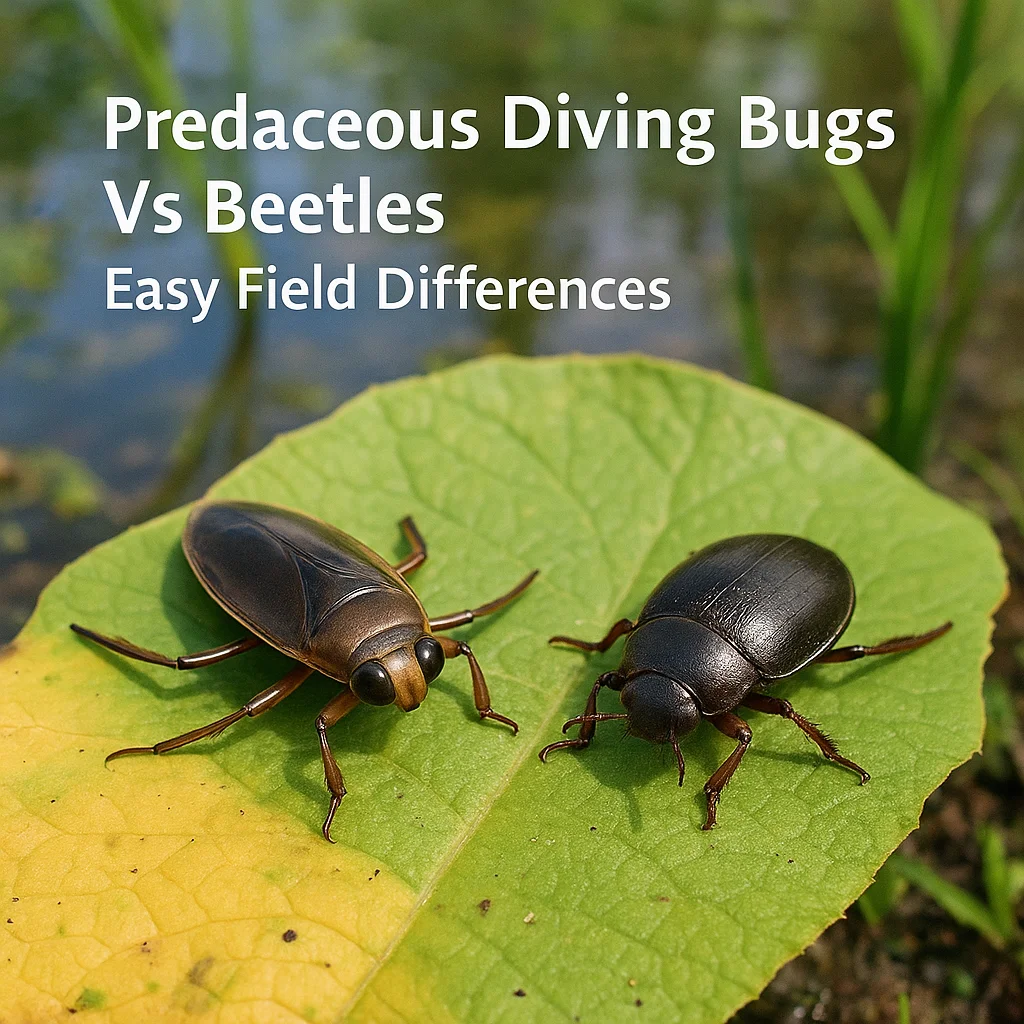
- Common names: Predaceous Diving Bugs, Water Beetles
- Scientific name: Varies
- Invertebrate or insect: Insects
- Order / family: Hemiptera (Predaceous Diving Bugs), Coleoptera (Beetles)
- Typical size range (adult): 5 mm to 70 mm
- Key colors/patterns: Brown, black, some metallic hues
- Activity: Varies between day and night; beetles often nocturnal
- Typical habitats: Ponds, lakes, wetlands, aquatic environments; some beetles terrestrial
- Where in the world it occurs: Almost worldwide, excluding extreme colds
- Seasonality: Most active in warmer months
🔍 Identification
Both groups exhibit distinct characteristics that make them identifiable in the field. Here's how you can tell them apart:
The predaceous diving bugs are streamlined and oval, equipped with biting mouthparts. Their silhouette is typically elongated with a flat body. They possess short, stout antennae that are less conspicuous. Their forewings are hardened near the base but soft towards the tips, resembling the typical hemipteran wing structure. They are agile swimmers, using their long hind legs adapted for paddling.
In contrast, beetles often have a robust, rounded or elongated body with a clear separation between the wing covers (elytra) and the body. Beetle antennae can vary widely in types but are more prominent. Their wings are fully hardened elytra, giving a shiny and armoured appearance.
Common confusion arises with aquatic beetles; however, observing their body shape and antennae usually provides clarity.
- Top ID Tips:
- Look for streamlined versus robust bodies
- Check the antennae length and style
- Observe swimming style: use of paddling legs
- Wing cover hardness and structure
- Leg and body orientation
- Presence of biting mouthparts in diving bugs
- Color variations from brown to metallic
- Check habitat: water versus terrestrial environments
🧠 Basic Body Structure
Both predaceous diving bugs and beetles are insects, thus they share some commonalities in their body structure, composed of a head, thorax, and abdomen. They each have six legs and possess an exoskeleton, which provides protection and support.
The exoskeleton is hard and must be shed periodically through the process of molting to allow for growth. Wings, if present, offer additional identification cues, with hemipterans having distinct fore and hind wing modifications compared to beetles' solid elytra.
Being invertebrates, they do not have a backbone, relying on their exoskeletons for structural support.
🌍 Habitat & Distribution
Predaceous diving bugs prefer aquatic environments like ponds, lakes, wetlands, and slow-moving streams. They are typically found hiding among aquatic vegetation, using the submerged habitat for hunting and protection.
Water beetles, however, can be found both in water and on land. They prefer similar aquatic settings but some species have adapted to terrestrial life in wooded areas or gardens, under logs and stones.
Geographically, both are widespread and can be found on all continents except Antarctica. Their presence in a region can fluctuate with environmental changes, such as shifts in water clarity or pollution levels.
📅 Seasonal Appearance & Activity
Most predaceous diving bugs and beetles are more active during the warmer months when water temperatures rise, and food is abundant. Their visibility can vary greatly depending on regional climates.
- Best Time to Spot It:
- Late spring through early fall
- Warmer regions may see them year-round
- Best during warm, sunny days
- More active after rainfall
🥚 Reproduction & Egg-Laying
The reproductive behaviors of both groups can be quite diverse. Predaceous diving bugs often engage in complex courtship rituals before mating. Eggs are generally laid on submerged plant material, ensuring moisture and protection.
Beetles can be more varied, with some depositing eggs in the soil, in wood crevices, or on aquatic plants. Egg counts can differ with beetle species often laying numerous eggs at once compared to the strategic placement by diving bugs.
🌀 Metamorphosis & Life Cycle
Both groups undergo complete metamorphosis in the case of beetles (egg–larva–pupa–adult) and incomplete metamorphosis for hemipterans (egg–nymph–adult).
The beetle life cycle starts with eggs hatching into larvae, which consume voraciously to grow before entering the pupal stage. This stage can last from a few weeks to several months. Adults emerge primarily for reproduction.
Predaceous diving bugs hatch as nymphs, resembling small adults. They molt several times, each time growing closer to the adult form. They are aquatic throughout their life stages, feeding on other insects.
🍽️ Diet & Feeding Behavior
Predaceous diving bugs are true carnivores, using their piercing-sucking mouthparts to prey on other insects, tadpoles, and small fish, making them efficient aquatic predators.
Beetle diets vary by species, with aquatic beetles often being opportunistic feeders consuming plant matter, detritus, or other insects. Terrestrial beetles may feed on plants, dead organic material, or be predatory.
🦉 Predators & Defense
The natural predators for predaceous diving bugs and beetles include birds, amphibians, and fish, which prey on the nymph and adult stages.
Defense strategies include camouflage, stinky chemical secretions, and in beetles, the hard elytra serve as armor. Diving bugs may also use their speed and agility to evade capture.
- Defense Highlights:
- Camouflage within aquatic vegetation
- Sticky or chemical deterrents
- Hard elytra for beetle defense
- Swift underwater movement
👥 Social Behavior & Swarms
Both groups are predominantly solitary. However, beetles may aggregate during reproduction or, for aquatic beetles, when conditions favor mass migration or dispersal in search of new water bodies.
Mating encounters in predaceous diving bugs are often competitive due to limited suitable partners.
🧭 Senses & Communication
Both insects rely heavily on vision and touch to navigate their environment. Predaceous diving bugs are sensitive to water vibrations, using them to detect prey.
Beetles can utilize pheromones for mate location and communication. Audible communication is rare in these insects, with chemical cues being more predominant.
🌱 Role in the Ecosystem
Predaceous diving bugs and beetles play crucial roles as both predators and prey. By controlling insect populations, they maintain ecological balance.
Their presence is indicative of healthy ecosystems and contributes to nutrient cycling, aiding in decomposition and new plant growth.
📉 Population & Conservation Notes
These species often thrive in healthy aquatic and terrestrial ecosystems. However, pollution, habitat destruction, and pesticides have threatened local populations.
- How to Help (Low-Impact):
- Preserve natural habitats and water bodies
- Cultivate native plant species
- Avoid pesticide use near habitats
- Promote clean water practices
⚠️ Human Interaction & Safety
Both groups are generally harmless to humans, with most contact being incidental. However, predaceous diving bugs can deliver a sharp, insect-bite-like sting if mishandled or threatened.
For any irritation from an encounter, washing the area and monitoring for allergic reactions is advisable. Seek professional help if severe symptoms occur.
As with all wildlife, observe respectfully without attempting to capture or harm the specimens.
📌 Summary
- Aquatic and terrestrial identities distinguish diving bugs and beetles
- Commonly found in diverse environments, mostly active in warm weather
- Metamorphosis varies, complete in beetles, incomplete in diving bugs
- Diet ranges from predation on aquatic prey to plant detritus
- Exhibit diverse defenses like camouflage and chemical repellents
- Social behaviors include aggregation during certain breeding events
- Critical ecological roles in pest control and food web dynamics
- Conservation is vital due to impacts of human activity and habitat change
- Safety around them requires basic precautions to avoid mild bites