🕷️ Water Boatmen Rowing Legs And Pond Behavior
🧾 Quick Facts
Water boatmen are fascinating aquatic insects commonly seen skimming the surfaces of ponds and slow-moving waters worldwide. Known for their oar-like hind legs, these insects exhibit unique behaviors essential to their survival in aquatic environments.
- Common names: Water boatmen
- Scientific name: Varies (several species in the family Corixidae)
- Insect or not: Yes, they are insects; invertebrate with three body segments and six legs
- Order / family: Hemiptera / Corixidae
- Typical size range (adult): 3 to 12 mm in length
- Key colors/patterns: Generally dull grey, brown, or greenish with light stripes
- Activity: Primarily diurnal (active during the day)
- Typical habitats: Freshwater ponds, lakes, marshes, and slow-moving streams
- Where in the world it occurs: Found globally except in extreme conditions
- Seasonality: Most visible during spring and summer in temperate regions
🔍 Identification
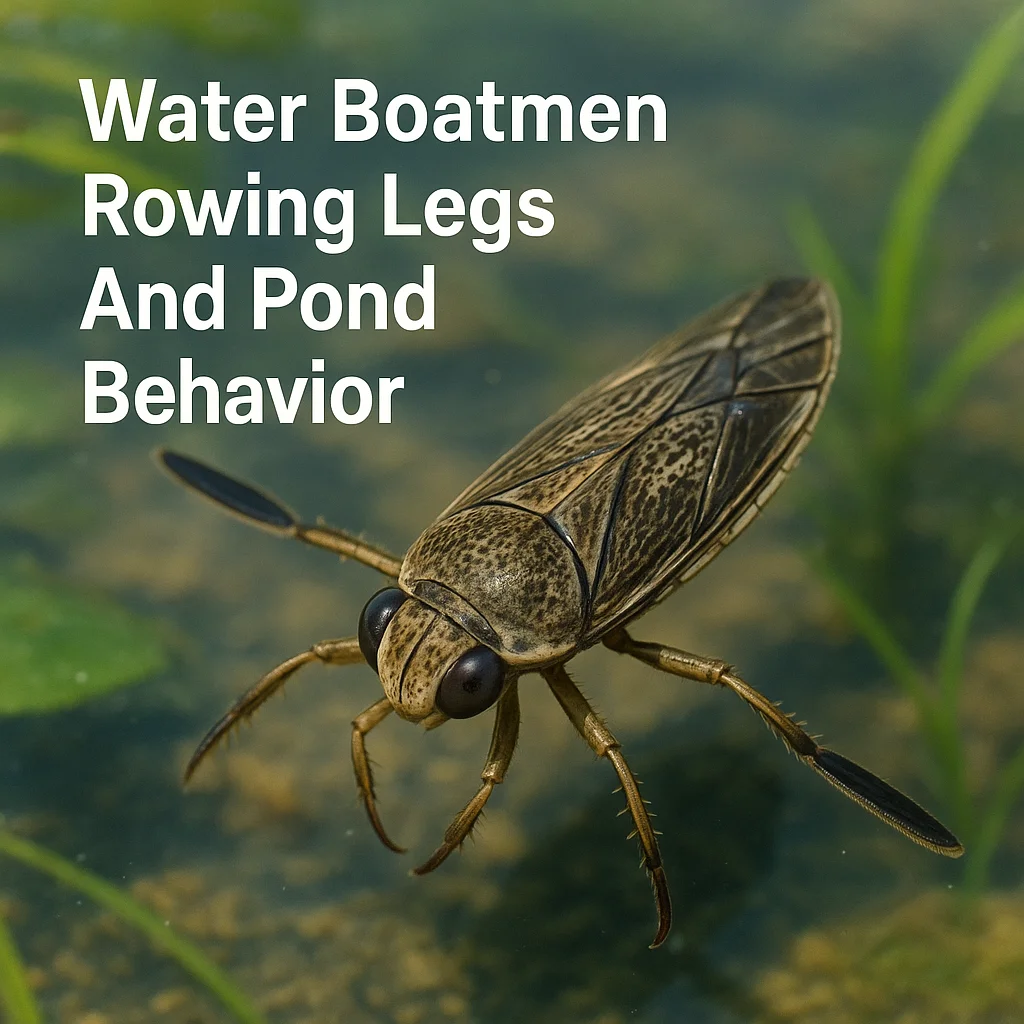
Water boatmen are easily recognized by their elongated oval bodies, flat beneath and convex above, which aid in their buoyancy. Their hind legs resemble oars, enabling them to row through water efficiently. Although they have wings, their flight is usually limited to moving between water bodies. Their antennae are short and inconspicuous, unlike some other aquatic insects. They are often confused with backswimmers, another aquatic insect; however, backswimmers swim upside down, while water boatmen swim right-side up.
- Elongate-oval body shape
- Rowing hind legs akin to oars
- Short, hidden antennae
- Stripes on their back
- Unlike backswimmers, they swim right-side up
- Faint wing markings
- Entire insect visible in frames, including all legs
🧠 Basic Body Structure
Water boatmen, like all insects, have three primary body segments: the head, thorax, and abdomen. They possess six legs and an exoskeleton that offers protection and support. Most water boatmen also have wings; however, wing usage for flying varies significantly. As invertebrates, they lack a spinal column, which is common to all insects. They periodically molt as they grow, shedding their exoskeleton to transition to the next life stage.
🌍 Habitat & Distribution
Water boatmen thrive in freshwater environments like ponds, lakes, marshes, and streams. They often reside on the bottoms of these water bodies or amidst submerged vegetation. These insects have a worldwide distribution, inhabiting every continent except Antarctica. As urban landscapes expand, water boatmen increasingly adjust to urban ponds and water gardens. Changes in local habitats due to water pollution or habitat destruction can influence their abundance.
📅 Seasonal Appearance & Activity
Water boatmen are most commonly observed during warmer months, from spring through early fall in temperate regions. These daytime active creatures can often be seen rowing along the water's surface in calm weather conditions. While they can withstand some temperature variations, significant shifts can impact their visibility and activity.
- Common during spring and summer
- Active primarily in daylight hours
- Increase in visibility on calm, sunny days
- Reduced activity in colder temperatures
- Less active during rain or with strong water currents
🥚 Reproduction & Egg-Laying
Mating for water boatmen involves courtship behaviors facilitated through underwater sounds and vibrations. Females lay eggs on submerged plants or other underwater surfaces, often in clusters. The number of eggs can vary widely, depending on species and environmental conditions. Egg-laying is strategic, often in areas that provide protection and sufficient oxygenation.
🌀 Metamorphosis & Life Cycle
Water boatmen undergo incomplete metamorphosis, progressing through three stages: egg, nymph, and adult. Nymphs resemble smaller versions of adults but lack fully developed wings. As they grow, they molt several times, each molt bringing them closer to adult form. Adults and nymphs share similar habitats and diets, consuming algae, detritus, and small aquatic organisms. Growth rates depend on water temperature and food availability.
🍽️ Diet & Feeding Behavior
Water boatmen primarily use their piercing-sucking mouthparts to feed. Their diet consists largely of microscopic algae and detritus, but many also consume small aquatic invertebrates. As scavengers, they play an essential role in keeping aquatic ecosystems clean by consuming decaying organic material. Their contributions enhance nutrient recycling within freshwater habitats.
🦉 Predators & Defense
Natural predators of water boatmen include birds, amphibians, larger insects, and certain fish species. For defense, they rely on camouflage, blending seamlessly with their watery environments. Their dull coloration helps them avoid detection by predators. While water boatmen do not have stingers or bites, rapid retreat into the depths offers them an additional line of defense.
- Camouflage with water vegetation
- Quick swimming to evade capture
- Being small and inconspicuous
- Gathering near underwater structures as safe havens
👥 Social Behavior & Swarms
Water boatmen are primarily solitary, interacting only during mate-seeking periods. Although they sometimes appear in groups, these are more aggregations driven by favorable conditions rather than true social units. Swarming is not typical; however, population surges may give the impression of swarming during optimal environmental circumstances.
🧭 Senses & Communication
Water boatmen have evolved to use a combination of tactile, chemical, and auditory senses to navigate their environments. They communicate primarily through water vibrations and substrate-borne sounds, especially during mating. These signals are transmitted through the water to potential mates. Visual cues are less crucial due to low visibility in their murky habitats.
🌱 Role in the Ecosystem
Water boatmen are vital components of aquatic ecosystems, contributing to the food web as both prey and consumer. By feeding on detritus and algae, they help maintain water quality and encourage nutrient cycling. Their feeding activities promote clarity and health in aquatic environments. Water boatmen are also prey for a variety of species, linking lower and higher trophic levels.
📉 Population & Conservation Notes
Water boatmen are generally widespread and not considered threatened. However, changes in water quality due to pollution, habitat destruction, and climate fluctuations can influence their populations. Data on their global population is limited, but local abundance may fluctuate widely.
- Avoid using harmful pesticides near waterways
- Create wildlife-friendly water features in gardens
- Support conservation efforts that protect freshwater habitats
- Encourage awareness of aquatic ecosystem health
⚠️ Human Interaction & Safety
Water boatmen pose no threat to humans and are non-biting/non-stinging insects. Observing them can provide educational insights into aquatic life. It is crucial to respect their natural habitats and to avoid collecting specimens without necessity. If bitten by aquatic insects, which is rare, wash the area and seek advice if reactions are severe.
📌 Summary
- Recognized by their rowing legs and oval body shape
- Common in calm freshwater habitats worldwide
- Most active during warmer months and daylight
- Incomplete metamorphosis from egg to adult stages
- Feeds on algae, detritus, and small aquatic fauna
- Preyed upon by birds and larger aquatic animals
- Important roles in aquatic nutrient cycles and as prey
- Impacted by water quality and habitat changes
- Non-threatening to humans and beneficial to ecosystems